📐 Measure of Shape
Last Updated: Jan 2026
Measure of Shape describes the shape of data distribution.
It tells us:
- Data kis taraf jhuk raha hai (skewness)
- Data kitna peaked ya flat hai (kurtosis)
🗣 Hinglish Tip: Shape = data ka overall pattern / curve ka nature
Shape helps to:
- Understand data distribution
- Choose correct statistical methods
- Analyze real-world datasets
Types of Measure of Shape
- Skewness
- Kurtosis
Skewness
Skewness measures the asymmetry of data distribution.
It shows whether data is:
- Symmetric
- Right-skewed
- Left-skewed
Formula For Population Skewness
Where:
- = population skewness
- = population mean
- = population standard deviation
- = population size
Sample Skewness
🗣 Hinglish Tip: Tail jidhar lambi ho → skewness udhar hoti hai
Types of Skewness
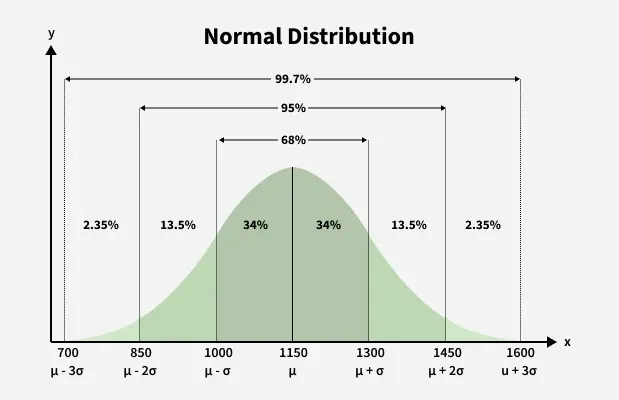
- Symmetric/Normal Distribution
- Mean = Median = Mode
- Skewness = 0
- Bell shape curve
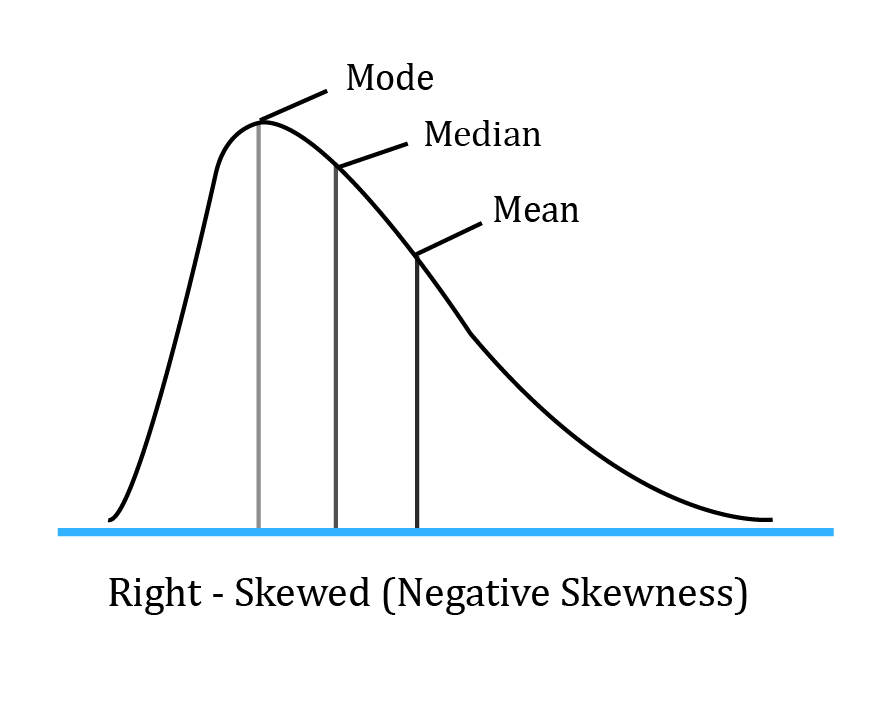
- Right-skewed/Positive Skewness
- Mean > Median > Mode
- Skewness > 0
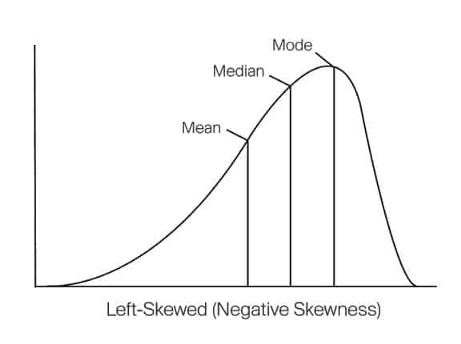
- Left-skewed/Negative Skewness
- Mean < Median < Mode
- Skewness < 0
Kurtosis
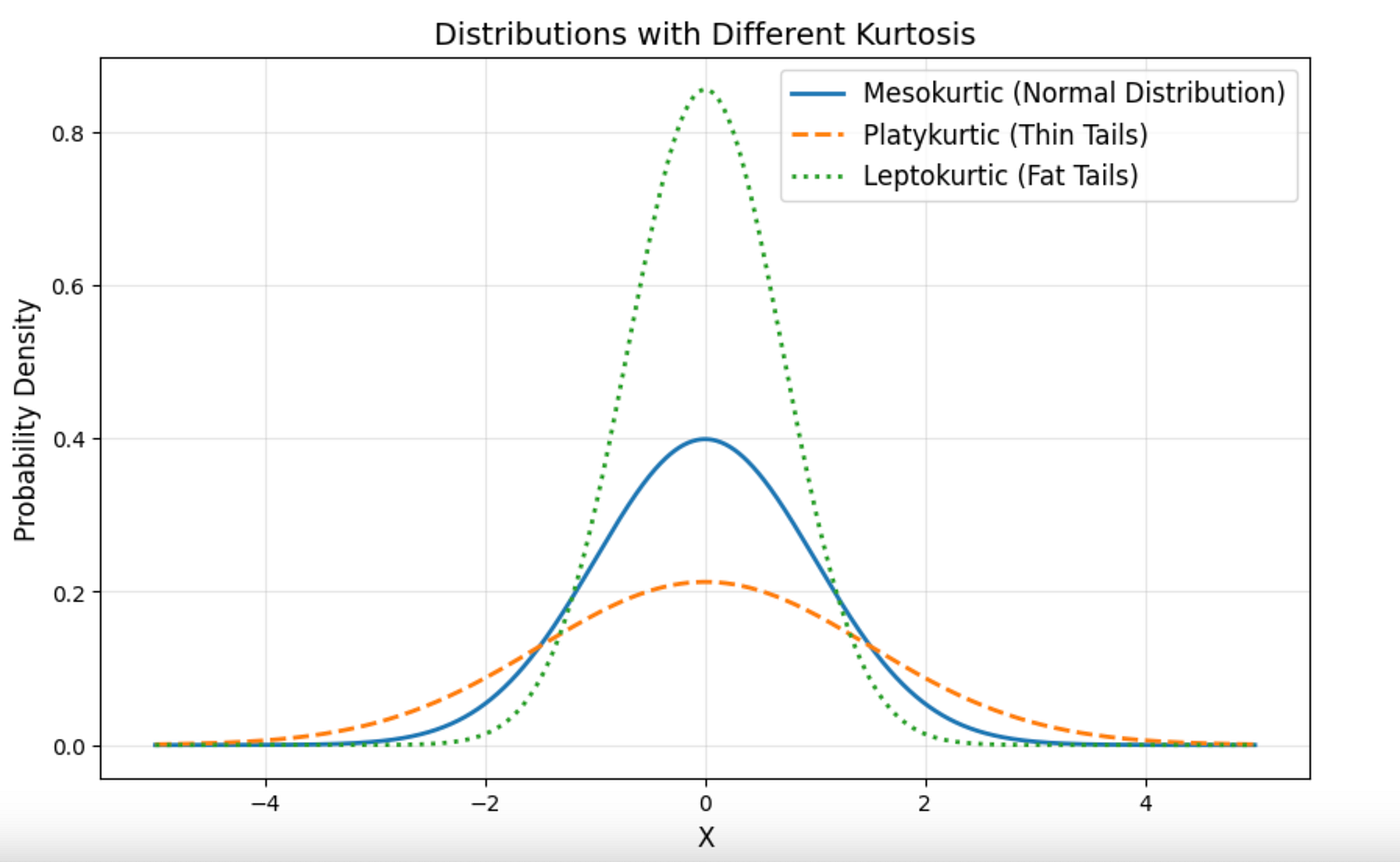
Kurtosis measures the peakedness or flatness of the distribution.
It focuses on:
- Height of the peak
- Weight of the tails
Formula Population Kurtosis
Excess Kurtosis
(3 is kurtosis of normal distribution)
Types of Kurtosis
🗣 Hinglish Tip: Kurtosis = curve kitni pointed ya flat hai